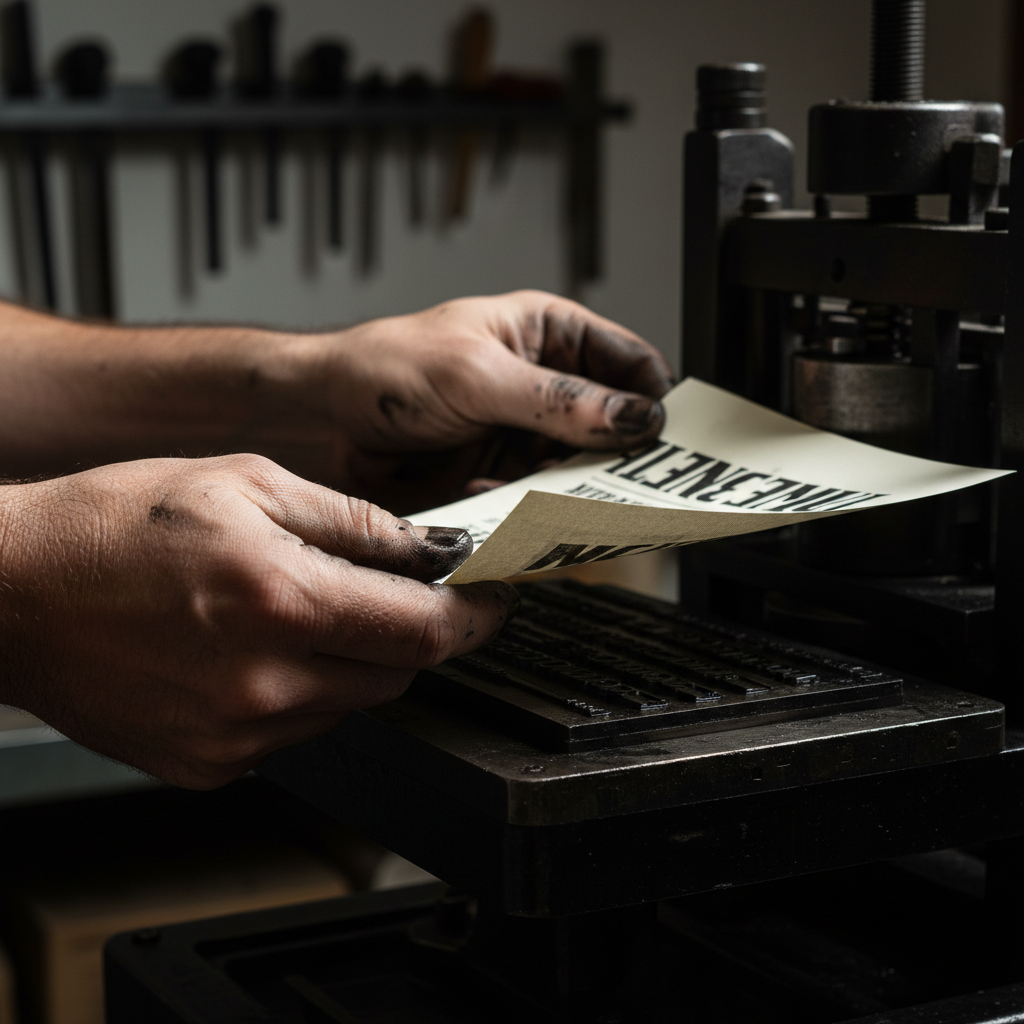
Editions that begin
where screens end.
Relief prints, etchings, and monoprints pulled by hand in small editions — for publishers, hotels, and galleries who understand that pressure leaves a mark.
Finished Editions
Each edition is catalogued, stamped, and signed. No reproductions, no open editions — the scarcity is structural.
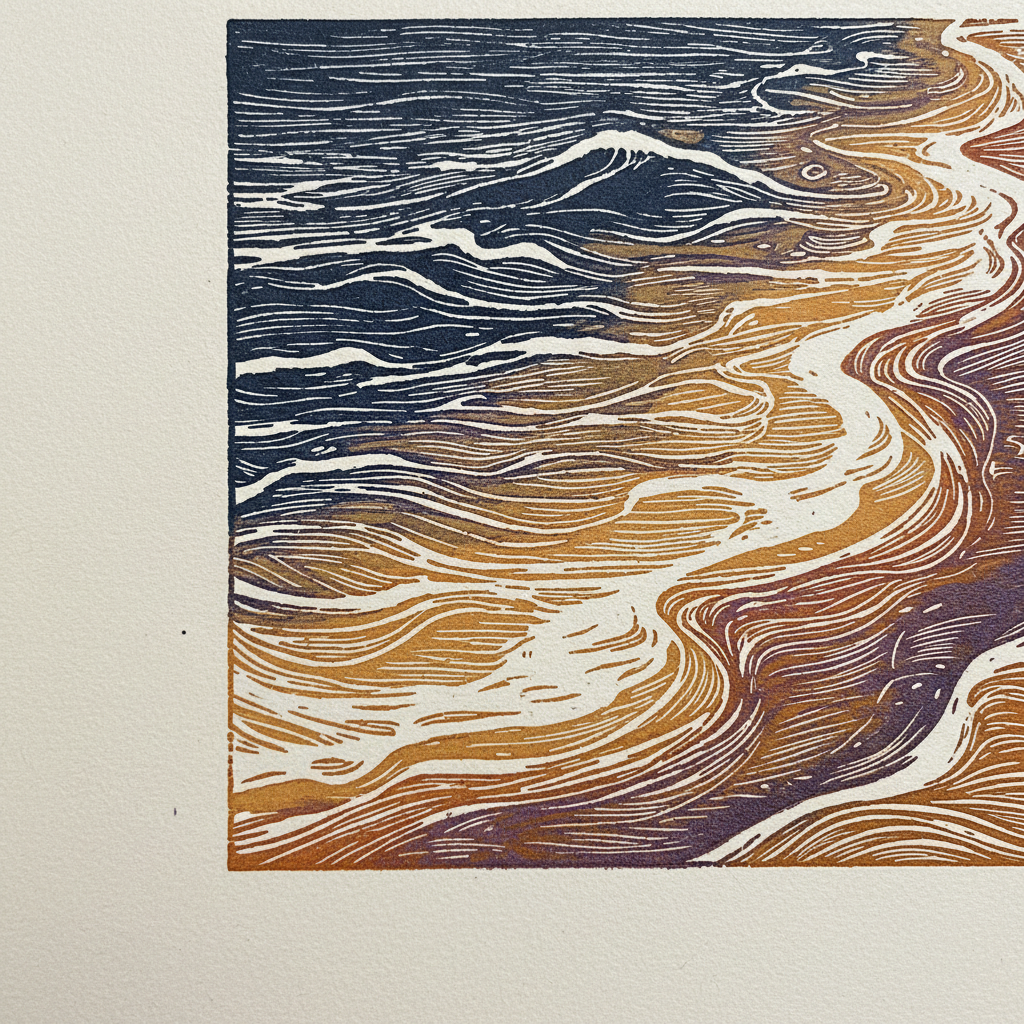
Tide Sequence I–IV
"Four-pass reduction. The fourth pass destroyed the block — no reprint possible. Every surviving impression carries the same irreversibility."
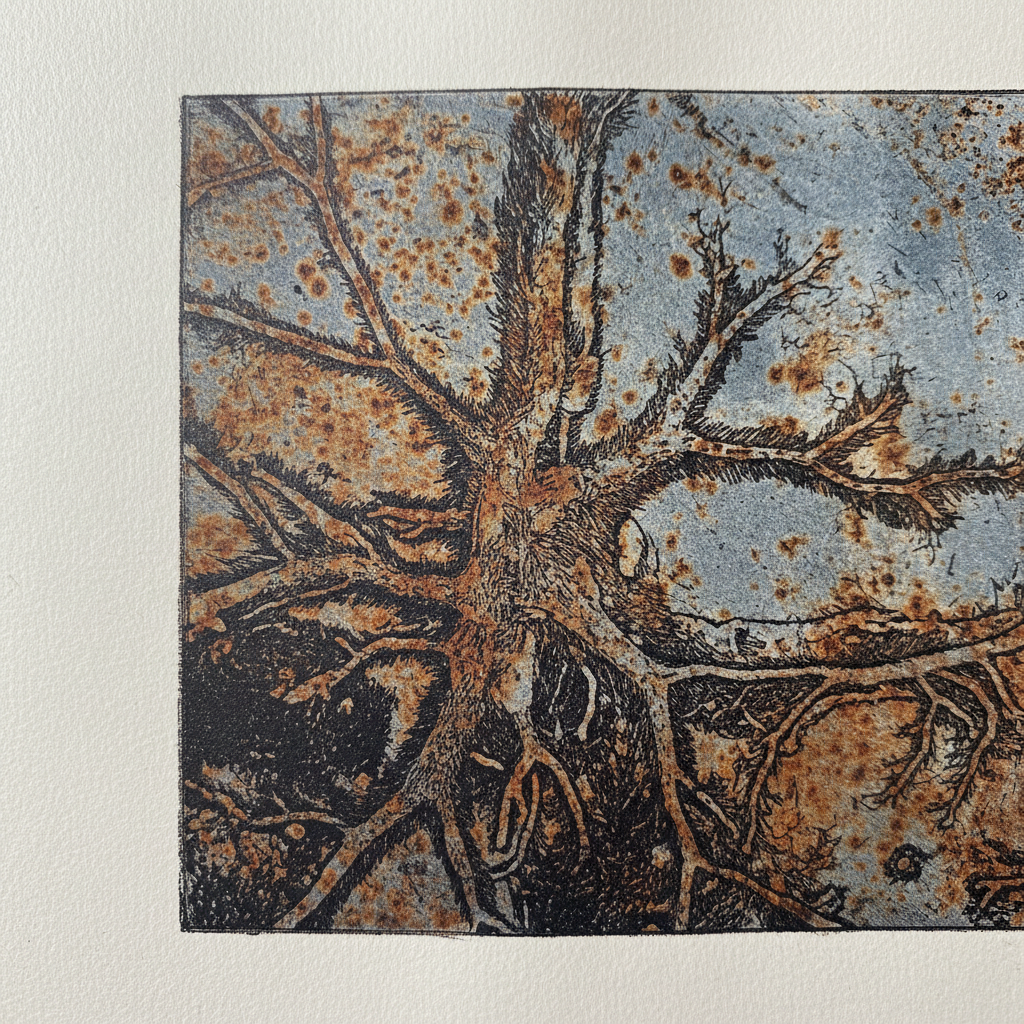
Iron Oxide Study
"Zinc plate, scraped and burnished to preserve the burr at key edges. The velvet in the shadow — that's the drypoint burr holding ink."
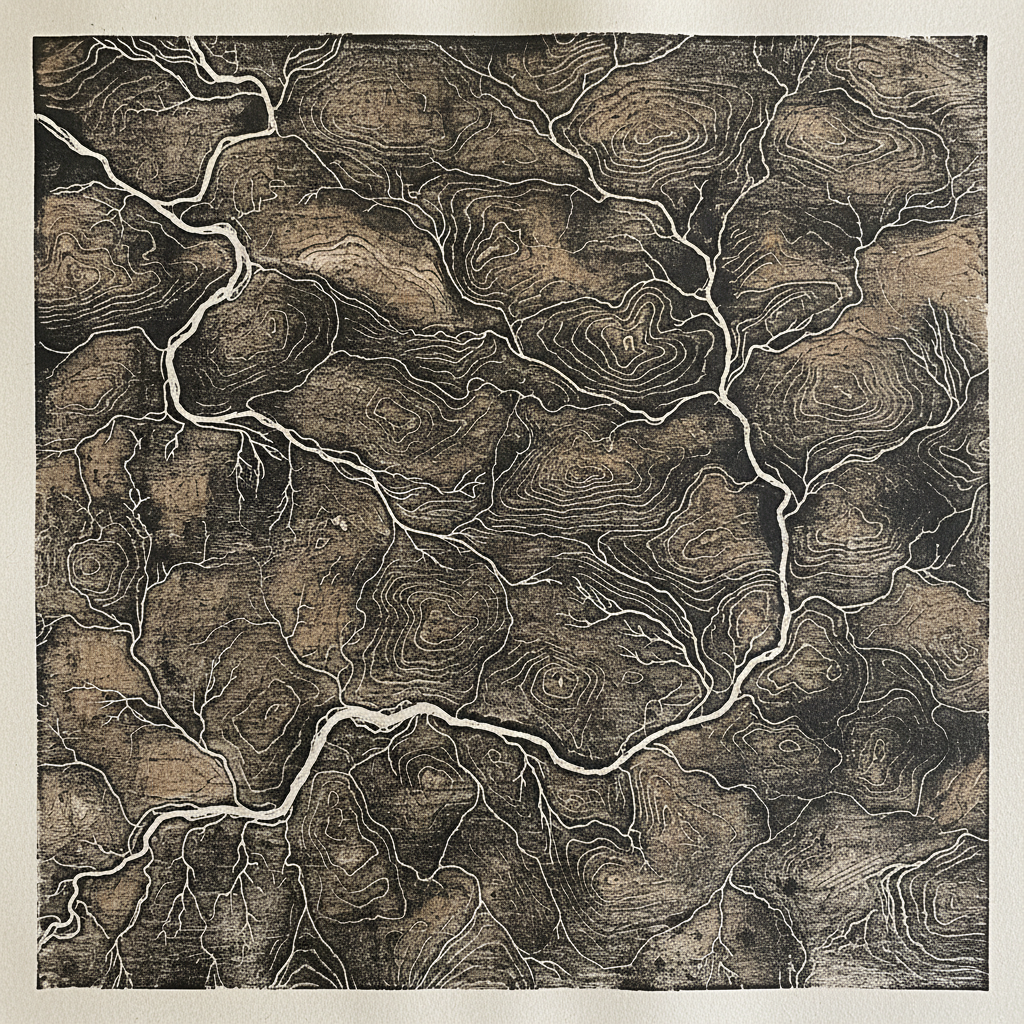
Watershed
"Printed on dampened Kozo. The paper absorbed the image and the image absorbed the paper — you can feel the ridge at the waterline."
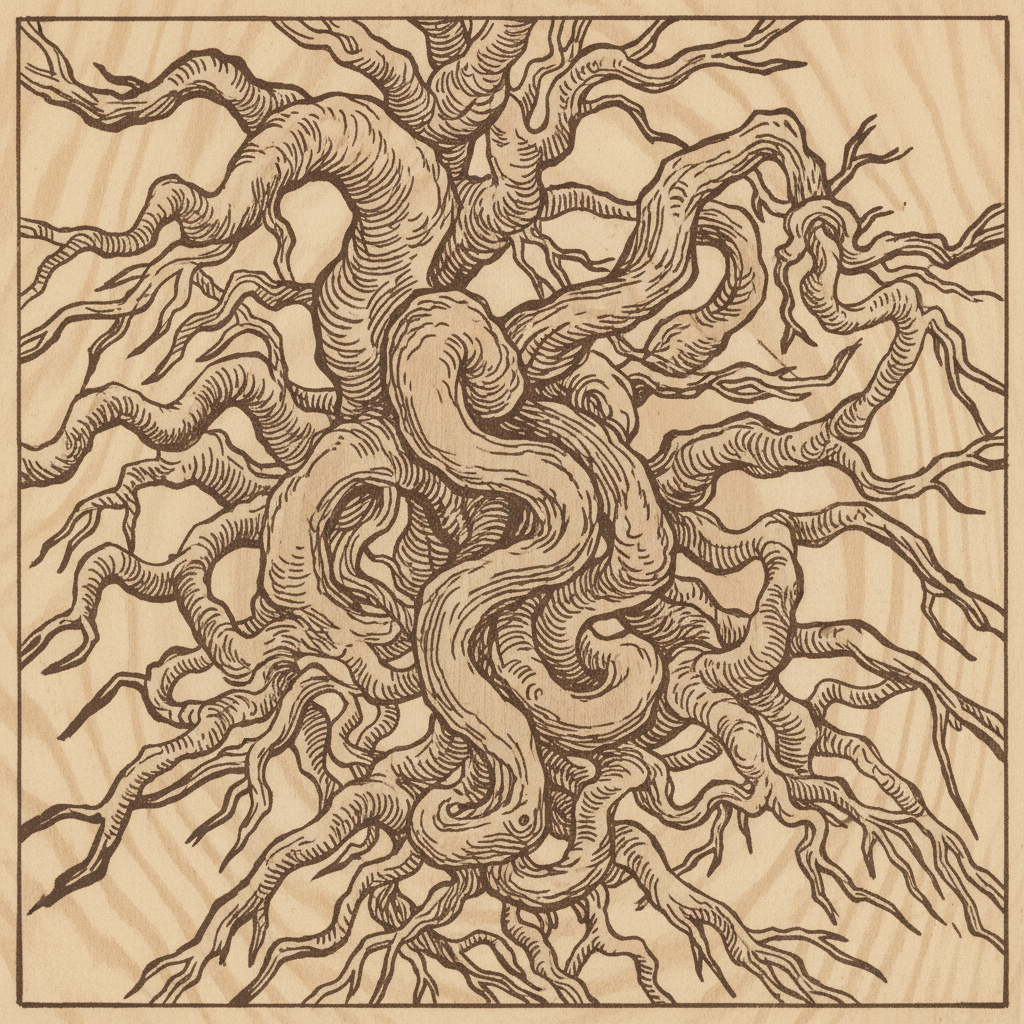
Root System No. 3
"Cherry block, end-grain. The wood's own grain becomes part of the image — geology and botany sharing the same surface."
Walking deeper
into the studio.
From gallery wall to drying rack to carving bench — the process is the work. Partners who understand this make the best collaborators.
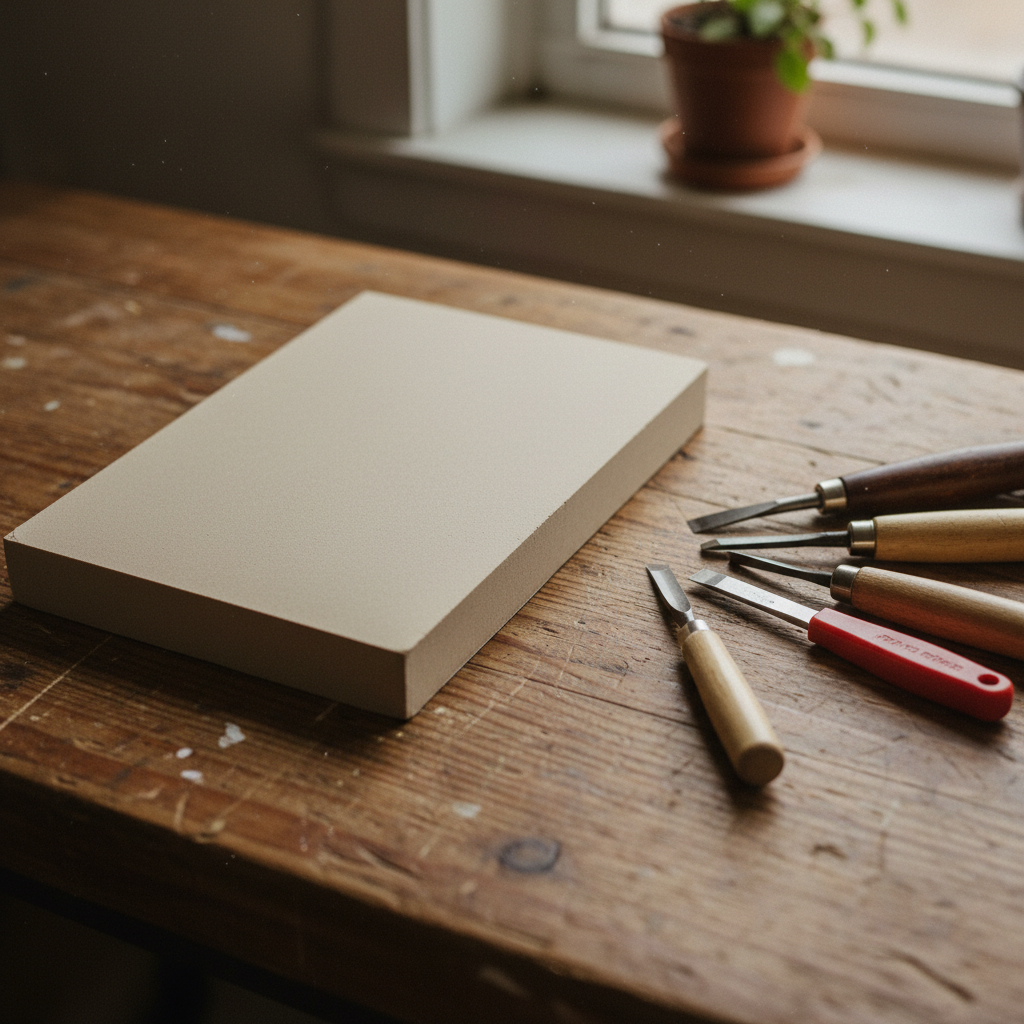
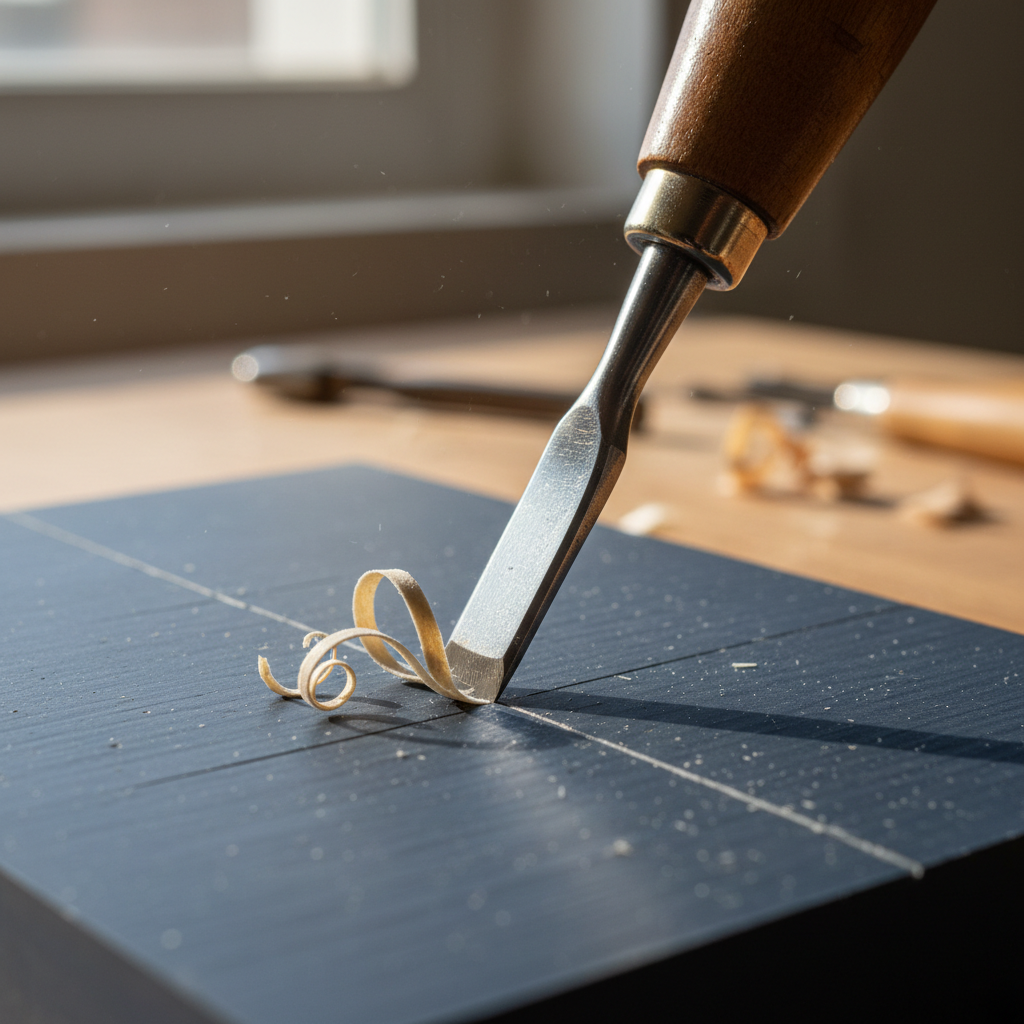
The block before the image
Linoleum is mounted on MDF to prevent warping under the press. Before any mark is made, the surface is inked and pulled — a ghost print that reveals the material's character.
↳ Note the grain direction. Cutting with it produces a different edge than cutting across.
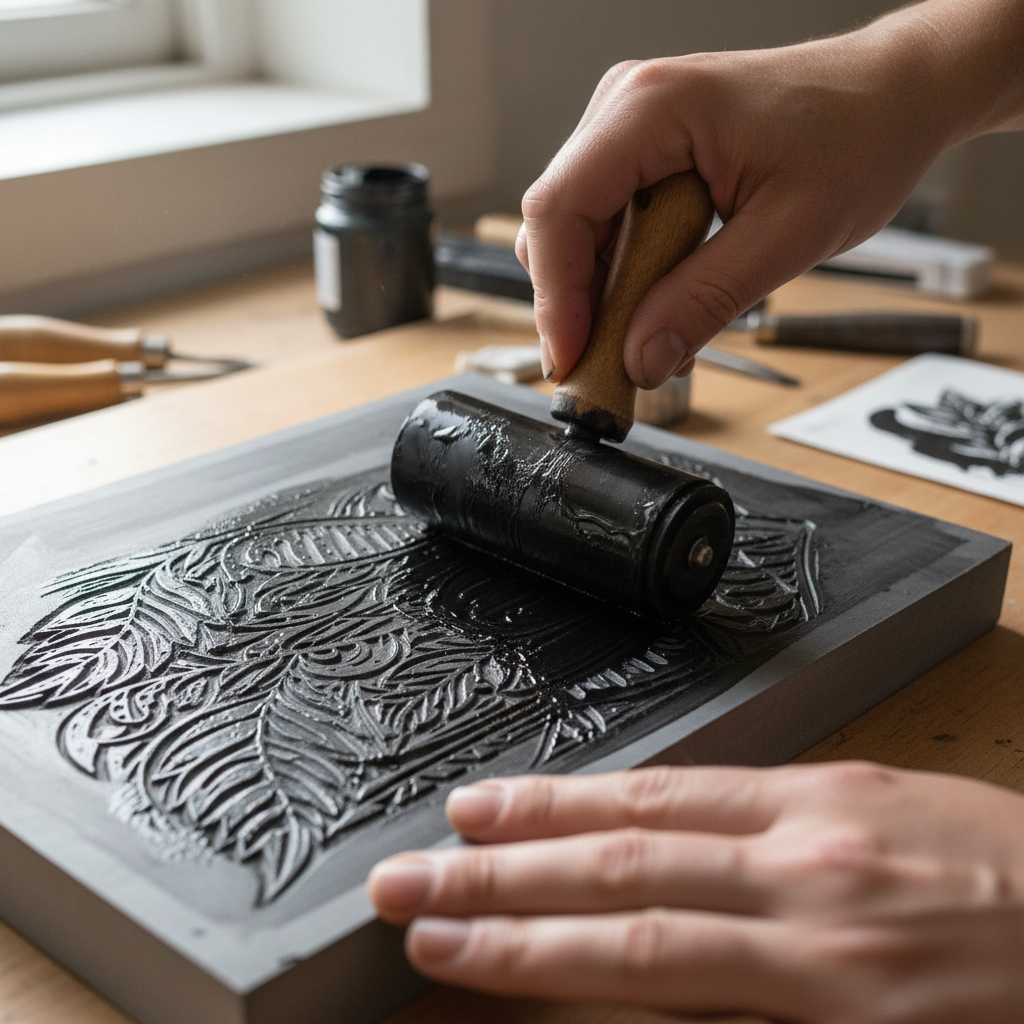
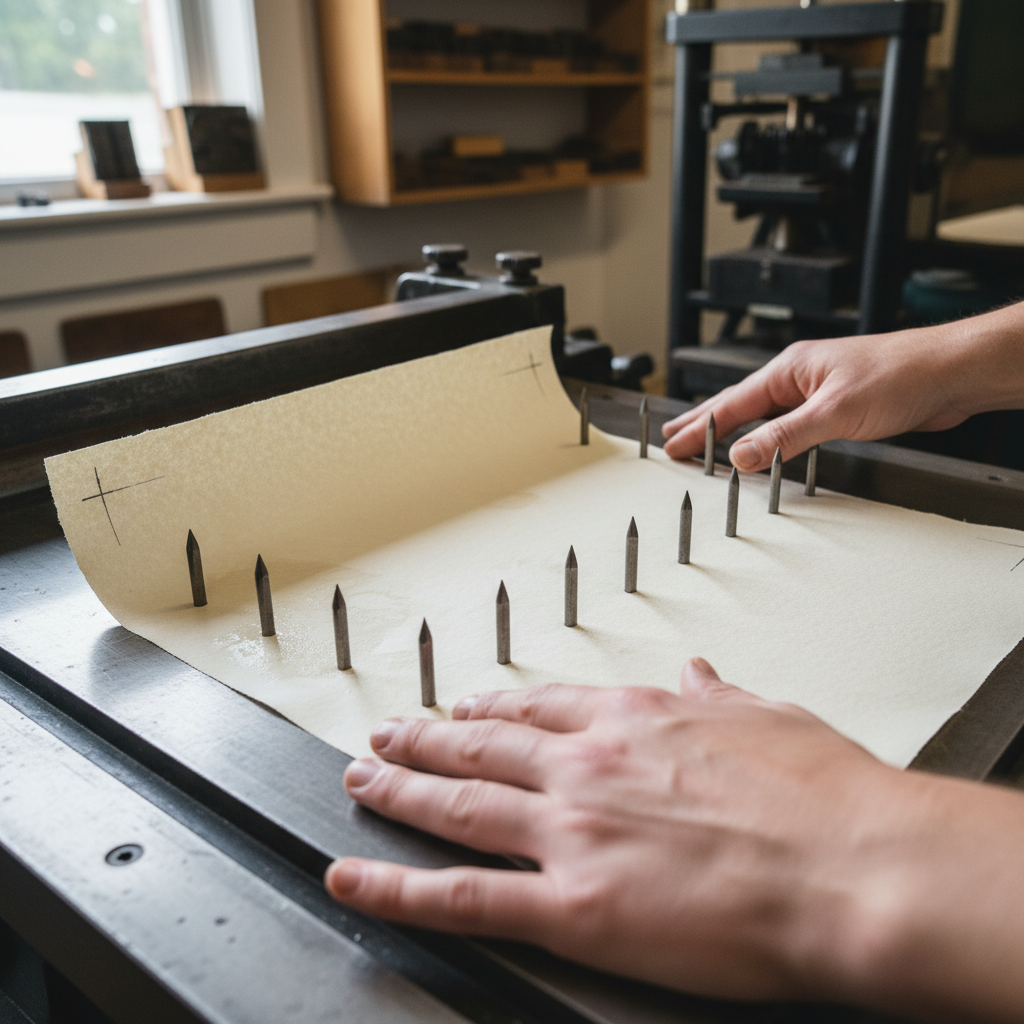
Ink on the brayer, brayer on the block
Oil-based ink, mixed to the right tack. Too stiff and it won't transfer; too loose and it fills the carved channels. The brayer pass is a judgment made with the wrist.
↳ Ink temperature matters. Cold studio = stiffer ink. The radiator is part of the process.
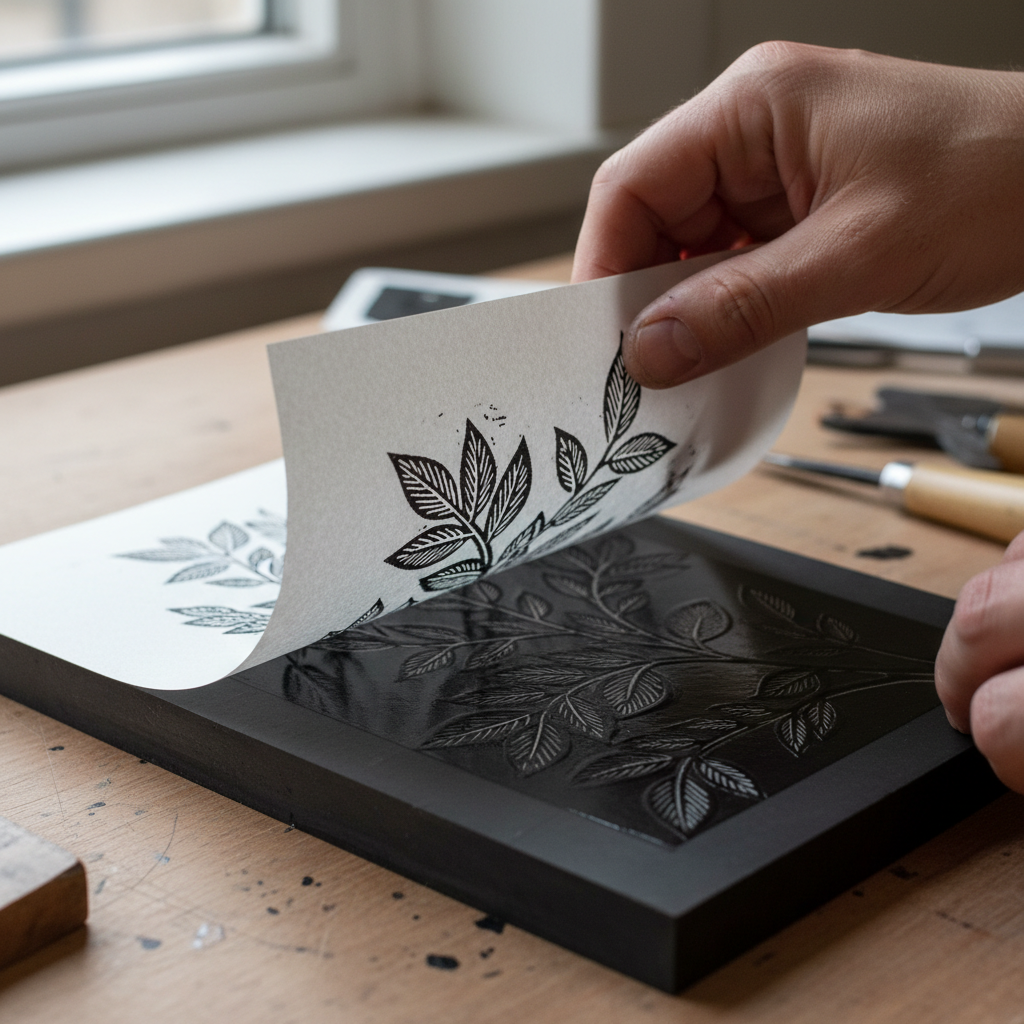
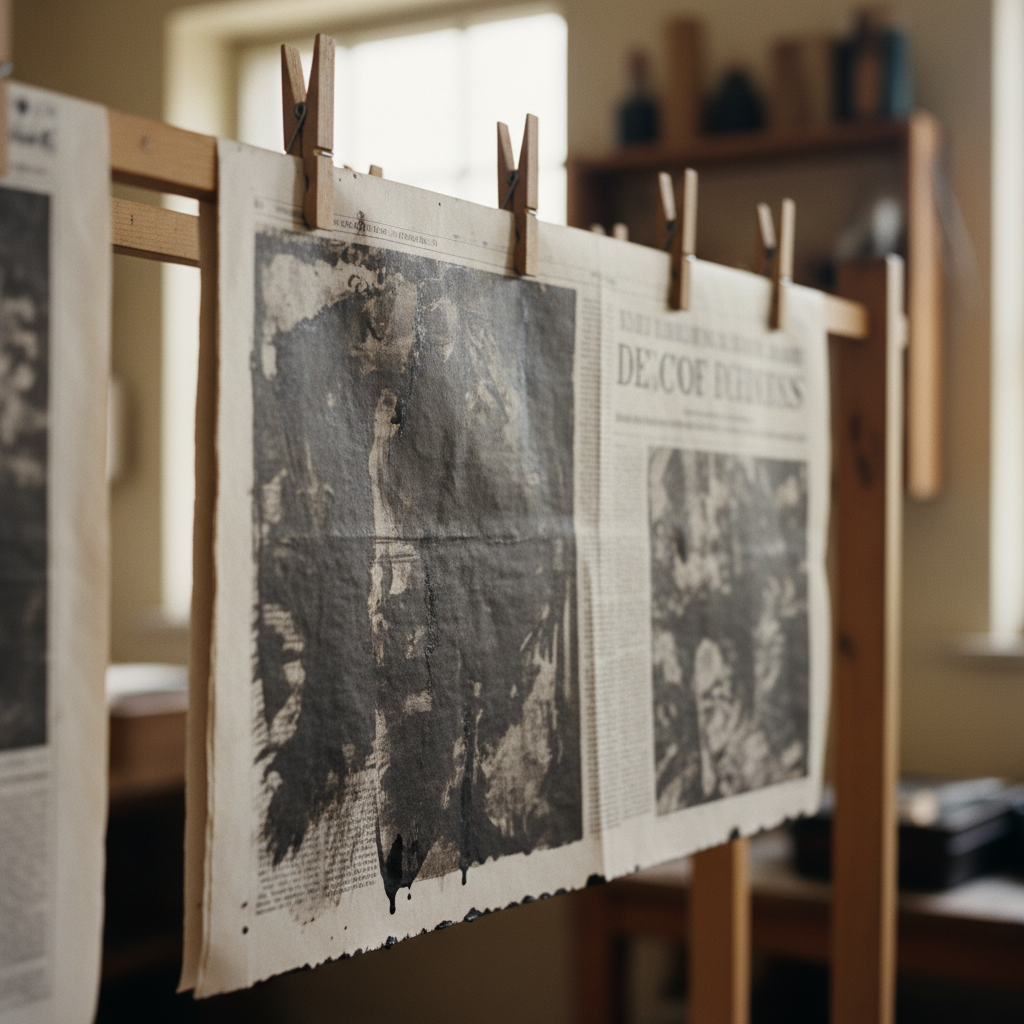
Baren pressure, one pass
The baren moves in overlapping circles, applying even pressure across the entire image. Too fast and the ink skips. Too slow and you pick up lint from the paper. This is the irreversible moment.
↳ The emboss is permanent. Even if the ink fades, the paper holds the shape of the block forever.
Voices from
the collaboration.



"The prints arrived and the entire editorial team stopped what they were doing."
We commissioned a twelve-print series for our spring issue and the collaboration was unlike anything we've done with a digital illustrator. The process was part of the story — our readers responded to knowing these were pulled by hand.
Propose
a collaboration.
This form is a creative brief in miniature. The specificity of your vision is the first signal of a good collaboration.